
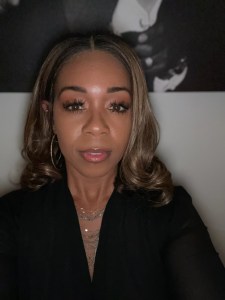
 I had the pleasure of speaking with our first Queen of the Month, Dawn Williams. A cloud security engineer who uses data analysts to assist with cancer research, trials, and studies. Dawn shares her journey in tech, starting from a young age up to now. She dropped some gems on how to navigate the industry while being genuine. She talks about finding your niche, owning who you are, some of the difficulties she faces as a black woman in tech, and the best ways to learn and grow in the field.
JaVonne: First, thank you for allowing me to interview you. You are the first Technically Melanin Queen of the Month. Let’s get started. First, tell me a little bit about yourself. Where are you from? What made you get into tech?
Dawn: I was born in Chicago, and I moved to Ripley, Tennessee when I was 16. I finished high school there. I remember when I was 13, there was some type of summer job program in Chicago, I was in a class that taught word processing. I learned how to type, and I liked it. I enjoyed being in front of a computer. So, I was like, Okay, when I’m grown, I want to work in computers. I just knew that, but I didn’t know exactly what I was going to do. Initially, my major was computer science, but I didn’t like the math course, so I decided to major in Management Information Systems.
What path did you take to get into it [school or certifications]? Did you do any internships?
Dawn: I went to the University of Memphis, where I studied Management Information Systems. I completed two internships: one with AutoZone. It was my way to get through the door. That was my first IT job. We had to upgrade i486 processors to Pentium 1 systems. That’s how I started working in IT, working 3rd shift, and we pretty much supported the West Coast. The 2nd internship was with a logistics company named GST Corporation. It was IT support and help desk admin, and I liked it. I did enjoy doing hardware and software support. I can’t believe I used to be the IT person that had to go under the desk, (urgh!) installing hard drives, RAM, keyboards, mice, etc
What is your current role?
Dawn: I am a Cloud security engineer, responsible for the security in the cloud. My company is focused on data analytics. The company handles healthcare data. Certain data can only be accessed by specific employees. It’s my responsibility to ensure that end users can only access that data via various applications/server platforms, etc. I am responsible for active directory and cloud user roles, user and firewall access controls, and managing ingress and egress network. Currently, I’m really excited about user security awareness training, security newsletters to all employees, and administering phishing tests.
What does your day-to-day look like?
D.W: A normal and volatile (ever-changing) day-to-day
may look like:
- Firewall egress filtering/ URL filtering/domain access administration
- AD / Okta user access administration
- IPS Protection Policy Review
- Penetration Test preparation for 3rd party
- End user support- website access issues, etc.
- Responsible for IT escalations from support staff
- Complete user audit reports- make changes AD security groups based on audits
- Linux and Windows operating systems troubleshooting
- Vulnerability management via Tenable
- Software licenses purchasing
When Am I Gonna Make a Living?
D.W: My first tech job was with AutoZone Corporation, I completed an internship that involved upgrading their West Coast stores’ computer system, and inventory/register software. I had to guide managers through upgrading their computer hardware – hard drives, processors, RAM, etc. It was tough since most of these managers were not computer literate. My 2nd IT internship was with a small logistics company – GST Corporation. I was responsible for end-user support, hardware/software support, etc. GST is the first job that was introduced to a Windows Server environment. I learned how to rack server equipment; manage a server room environment, etc.
What type of network or relationship development did you do to get into/prepare for this role?
I think it really is about building relationships. Because when I first started my first internship, I knew a little bit, but I didn’t know a lot. But I was open to learning. My manager, I think my manager was just a month older than me. So, we were the same age. He just taught me a lot. I think it was about building those relationships with him. Just being honest about what you do know versus what you don’t know. Don’t walk up in there acting like you know a bunch of [expletive] and you don’t.
Also, mentors don’t have to look like you. They don’t even have to work in the same department as you, but if you find somebody that you know is willing to take you under their wing.
I know you said at one point you were talking about getting your CCNA. So, are you still pursuing certifications or continuing education? What goals are you pursuing right now?
Where do you see yourself in 5 years?
D.W: Five years from now, I would love to focus more on project management, which deals primarily with incident response and management. A job that allows me to travel and consult in cybersecurity would also be a career goal in the next 5 years. If I don’t do that, I would go back and get my master’s because I still want to do health care administration. I remember I found a degree that focused on healthcare analytics. I hope to stay in the healthcare industry, that I know for sure.
As a black woman who works in a male-dominated industry, how do you navigate it?
D.W: Oh, man! That’s a tough one, ’cause I’m-I’m still trying to manage that. I would say, it’s almost like you have to be always in control of your emotions because you can sometimes take things personally. So, I think the first thing is that dealing with a male-dominated team, I wouldn’t say you have to know your role, but you definitely have to control your emotions. You have to be able to speak intelligently about whatever you’re working on. You have to know your stuff. You almost, in my opinion, have to be more organized. One thing, I think, is a strength of mine is that I am really good at written communication because of my background in dealing with users. I’m a little bit more approachable.
You kind of have to play this role of being nice. You can’t be aggressive, right? There are moments where I was more like, Shut the [expletive] up, but I can’t be like that.
So that’s why I keep going back to managing your emotions. Know the topic at hand. Know your technical expertise. Be really good at verbal communication. I think that’s helped me. Along the way, there are times when I do feel like nobody’s listening. For me, there are moments when I don’t feel heard. As a woman, there are moments I don’t feel respected. If I were the other guy, they wouldn’t ask me that. There are moments when they’re laughin’ and jokin’, and
I don’t feel part of the conversation.
But then, that’s how I kinda had to learn how to insert myself in and kind of go with the flow with things, because I am the only one [woman].
I’m- I’m still…as long as I’ve been in my field I’m still navigating that. I’m still trying to figure it out. But it’s- it’s tough. I ain’t gonna sit here and say, All you gotta do is like, show your black girl magic. They be like, What’s that? In my opinion, unless you can tell me your black girl magic made you respected, it ain’t respected where I work. So, I have to learn to navigate it.
What would you suggest someone starting out do to make themselves stand out and nullify any misconceptions they may have surrounding being a black woman in tech?
D.W: Be a team player. Try not to show a lot of emotion but show that you do have passion. Step in. You can go above and beyond. I kind of look at it like this, maybe this is my Gen X philosophy, any time I go above and beyond that’s something I put on my resume. For me, it’s an opportunity to learn. Every project, every time somebody reaches out to me when they really shouldn’t be reaching out to me directly. If I can help them I can, or I’ll try, because I feel like it’s a learning experience for me. You’re new on the team that you’re trying to fit in, and sometimes you gotta laugh at the stale jokes as a black woman.
Once people know what you look like they may question your intelligence or your judgment. I feel like now that I’m behind the scenes where you can’t see me, people don’t question me. But I remember being in the office, it being more and more questions. But now that I’m 100% remote, I’m not questioned as much because no one know what I look like.
Keep Hanging On
If you could describe your tech journey in one word, what would it be?
D.W: Volatile. Ever changing, ever evolving. It hasn’t been the same every day. It’s different. No day is the same, like 2 weeks ago I was sitting around like, Ain’t nothing going on? Then today, I’m like, Oh, my God! Where was all of this 2 weeks ago!?!
Who has taught you the most about your craft/career?
D.W: I think the people I reported to, my managers. My previous manager, Paul, taught me the art of communication and the art of being pleasant. My current manager, he’s taught me the art of being very technical. He’s like, I think he’s a brilliant engineer, really smart. But one thing I could say is he’s taught me a lot about the cloud environment. I have one really well-rounded colleague. He’s a bit of both. He’s a good people person, and he’s really technical.
What advice would you give someone thinking about getting into tech or those who may just be starting their tech careers?
D.W: Oh, wow! I would say definitely find your niche. It’s so many things, you can get lost really easily, and trying to figure out what you want to do. But I think it’s important to find a niche in tech, whatever that might be, and then take that and grow from it.
There are so many areas of I.T: networking on Prem, you’ll do networking in the cloud, and then from there you’ll build your certification base. Even if that’s like server administration, like which OS (operating system). Will you focus primarily on Linux or Windows? Then go from there.
So I will say, find your niche first, find what makes you happy. Find what you’re good at.
I went from here to here to here, you know? It-it was kind of cool. Because when I started getting into networking with the switches and routers, and firewalls, that’s when I realized, like, Hey, you know what? I think that’s now my niche. Because the cool thing about it, it’s so many different routes you can go in. If you’re good at math, maybe you should go into networking because then you’ll be good at subnetting. You’ll be good at routing and understanding switching and things of that nature. You know, whatever works for you, find it.
It’s not just server support or server administration. Say you want to program, you decide you want to deal with security, you decide you want to be an architect, data analyst, whatever. So, once I found that niche, I was like, Yeah, I think I like network security. I like being the one with the keys to the kingdom.
How did you get to where you are today in your life/career/etc? What was your motivation?
D.W: Growing up with 4 boys in the house, and me being the only girl. I always wanted to do what the boys did, so that pushed me to be where I am right now. Like, I am motivated to be the only woman. You know that, on the conference call, or the only woman engineer, ‘cause I’m like, If they can do it, I can do it too. That always kind of pushed me, you know, to learn and to do things. Just being ambitious and knowing that I have just as much intelligence to do what they can do.
What is the most important lesson you’ve learned over your career?
D.W: I think the biggest lesson I’ve learned is never stop learning. Like I said, that’s why I call my career volatile ‘cause it’s ever-changing. Just learn different things, learn different operating systems. Just- just learn.
Say on top of what’s going on right now, even like ChatGPT. I know I joke about it. I mentioned it a lot, but it’s like, that’s where the world is going: AI. I kinda work for an AI company, to a certain extent. But we do use data analytics. We tie in artificial intelligence to provide solutions for pharmacists’, and pharmaceutical companies’ studies. So they are, they’re able to take that data in some type of way. Use it to help people, so that’s why I like learning a little bit about AI or just playing around with it.
In your opinion, what is the most important personality trait/strength someone would need to work in your industry/ be successful in your job?
D.W: Continue to learn, continue to grow. Know your technical expertise and don’t be afraid to speak on it. Being able to communicate effectively. And
Never stop learning.
What was the biggest turning point in your career so far?
D.W: [My career hit a turning point when] I got into networking because it kind of took me out of the help desk. It kinda went from like that first-tier support, you know. It kinda got boring, doing the same stuff, like I don’t wanna fix nobody printer. I don’t want to go swap out your keyboard. I don’t wanna talk about your phone. But when I got into networking, I was able to understand the back end (DNS resolvers, network backups, operating system updates, security updates, etc.). So I think that helped me.
What was the biggest challenge that you have overcome?
D.W: I will say, still working and dealing with a male-dominated environment. Also learning to work with personalities I’m not accustomed to. I went from working with someone I knew was bubbly and caring to someone a little dry.
And it first, I tried to match that energy but I realized that’s not me. Me trying to match that negativity just didn’t work for me. I’ma be myself. I’m still gonna be pleasant. I’m still gonna say good morning. I’m still gonna ask how you doing. I’m still gonna be me.
And then I realized that [when I spoke] then he started doing it back. Don’t get me wrong. Don’t think we are here holding hands, talking, and singing Kumbaya. Don’t think that at all, ‘cause I ain’t trying to paint that picture. But what I am saying is that it softened his approach at times. I think that’s been my biggest lesson.
So that lets me know, like, from a deeper place like when you start looking at people as people. That’s helped me out too.
Pearls (of Wisdom)
Takeaway #1: Find your niche in tech. Find what you’re good at and then grow from it.
Takeaway #2: Never stop learning. What’s relevant today, may not be relevant tomorrow. Tech is ever-evolving. The benefit of certifications is they are current, it covers the most up-to-date information regarding that subject and shows to employers that you are current and knowledgeable about that particular area.
Takeaway #3: Build relationships. Find a mentor. They don’t have to be in the same department you work or look like you. Just someone that is willing to take you under their wing.
Takeaway #4: Manage your emotions, but show that you are passionate about your expertise. Never let anyone take you outside of who you are.